Booth Traffic Is Not the Goal. Market Memory Is.
EVENTS
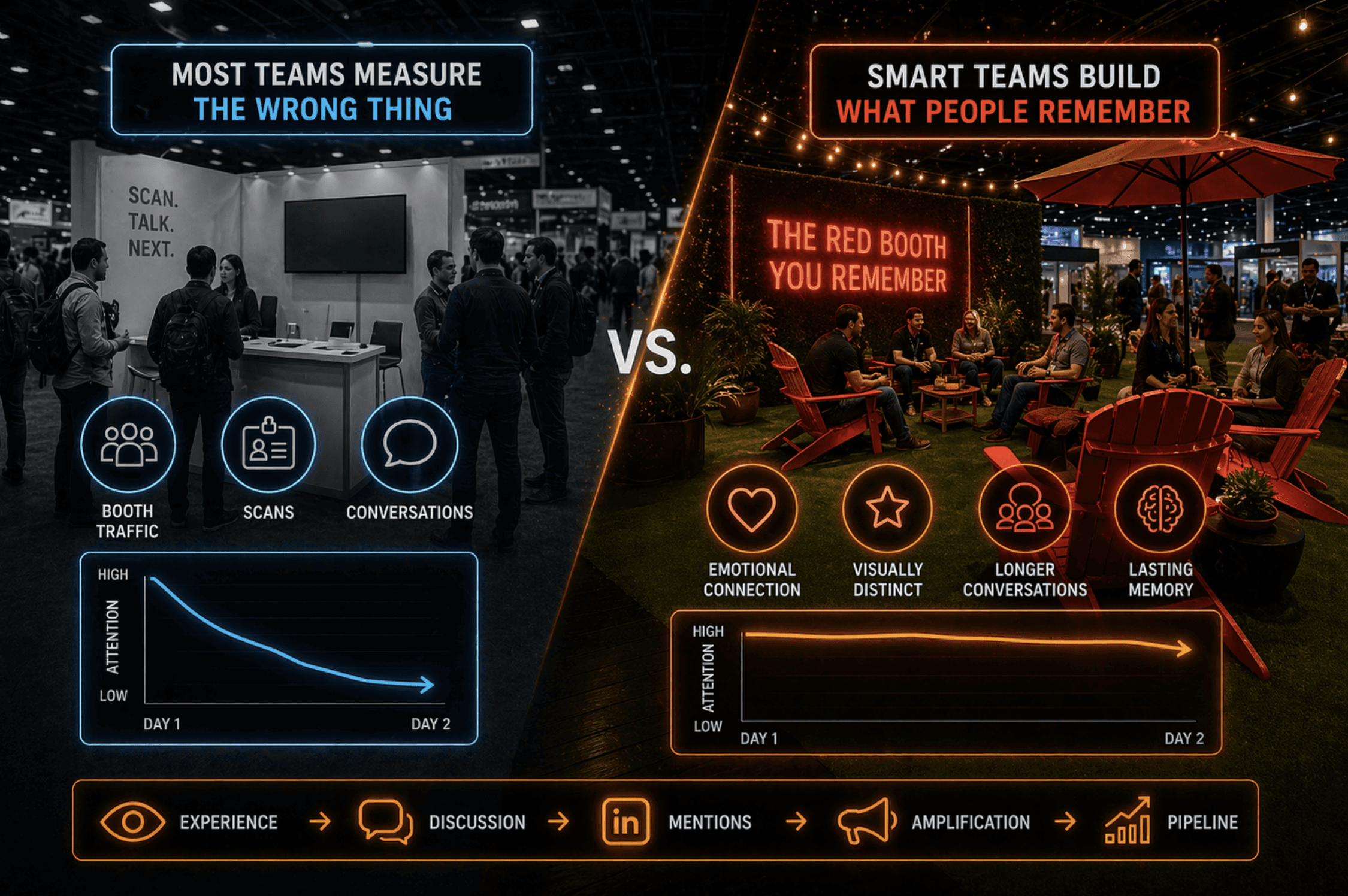
Most teams measure the wrong thing
After every event, the same question comes up:
👉 “How was booth traffic?”
How many scans?
How many conversations?
How many people stopped by?
It feels like the right metric.
It’s not.
Because traffic is temporary
People walk by.
They stop.
They grab something.
They move on.
And by the next day…
They’ve forgotten half of what they saw.
What actually matters is what sticks
Not:
👉 how many people came by
But:
👉 how many people remember you after they leave
This is where most booths fail
They all look the same.
same structure
same messaging
same demo setup
same energy
From the attendee perspective:
👉 it’s a blur
Enter: the red show crew
At recent events, we flipped the model.
Instead of building a booth…
We built a scene
turf underfoot
red lawn chairs
patio furniture
open space to sit and talk
No pressure.
No pitch-first interaction.
No “scan me before we talk.”
Just:
👉 a place people actually wanted to be
And something interesting happened
People didn’t just stop by.
They stayed.
They sat down.
They talked longer.
They brought other people back.
And more importantly…
👉 they remembered it
Because memory is built differently than traffic
Traffic is:
transactional
short-lived
volume-based
Memory is:
emotional
contextual
repeatable
You don’t remember booths.
This is why “different” wins
Not louder.
Not bigger.
Different.
Because in a sea of sameness…
👉 contrast creates recall
The real goal of a booth
It’s not:
lead volume
badge scans
foot traffic
It’s:
👉 market imprint
When someone leaves the event, you want them thinking:
👉 “That was the red booth with the lawn chairs.”
👉 “That was the one that felt different.”
👉 “Those are the people I want to talk to.”
This extends beyond the floor
The best part?
That memory doesn’t stay at the event.
It shows up in:
LinkedIn posts
conversations
follow-ups
internal team discussions
“Did you see that booth?”
That’s the signal.
And this is where content connects
Because when you pair:
a memorable experience
with
You reinforce that memory.
Over and over.
This is how events actually drive pipeline
Not from:
👉 a single interaction
But from:
👉 repeated recognition
What most teams get wrong
They optimize for:
efficiency
coverage
immediate ROI
Instead of:
differentiation
experience
long-term recall
The shift to make
Stop asking:
👉 “How do we get more people to the booth?”
Start asking:
👉 “What will people remember about us after the event?”
What this looks like in practice
create a physical experience, not just a booth
design for conversation, not conversion
make it visually distinct
give people a reason to stay
reinforce it with content afterward
The big idea
Events are crowded.
Attention is limited.
And memory is everything.
The teams that win aren’t the ones with the most traffic.
They’re the ones people can’t forget.
FAQ
Does booth traffic matter at all?
Yes—but only as a secondary metric.
How do you measure market memory?
Through repeat mentions, social engagement, and post-event conversations.
Do you need a big budget to stand out?
No. You need a distinct idea executed well.